
Sandra Boisvert, Research Manager
ORB International | October 2026
In today’s data-rich environment, data and analysis tools are now more accessible than ever. While access to data is great, without the appropriate skills and statistical literacy, this abundance of information can lead to misleading, or even harmful, conclusions. The research team at ORB understands the diverse and multi-layered nature of public opinion data and takes responsibility to ensure credible and robust results. Collecting nationally representative data, monitoring data quality, and ensuring statistical significance are only a portion of what goes into ensuring credible results. Relying on a trustworthy basket of well-respected analytic techniques allows us to support our clients and cut through results.
One strategy that ORB relies on to reach a comprehensive and nuanced understanding of complex social phenomena is the multivariate index approach. This approach is useful when examining public understanding, beliefs, and preferences across a range of dimensions, which tend to have complex underlying research questions that respondents may not be able to answer if they were asked directly (at least, not without generating significant respondent bias). The multivariate approach is well-tested and well-used; some common publicly available multivariate indices are the Corruption Perceptions Index, the Air Quality Index, and the Poverty Index. As ORB is focused on generating primary data, our research team has the advantage and flexibility of being able to design multivariate indices to fit the needs and depth of specific research questions.
ORB researchers make as many key decisions early in the research development process as possible to ensure an unbiased and credible approach to population assessments. Our team begins mapping out multivariate index construction plans before data collection occurs during survey instrument development.
What is the Multivariate Index Approach?
The multivariate index approach is a straightforward yet powerful statistical technique which allows researchers to aggregate and analyze collectively several points of public opinion data, related to one another, within a single overarching research question.
Utilizing multiple survey items to comprise a single metric allows a holistic assessment of public opinion on the topic at hand.
To ensure statistical reliability, once the researcher has selected survey items to be included in the multivariate index, they should then examine correlations or reliability (via Cronbach’s alpha) between the index composites to ensure that all items used for measurement are capturing the intended concept. If one of the items indicates a negative correlation to the rest, it may indicate that it is measuring a different metric than anticipated and may need to be removed from the multivariate construction.
Case Study: Afrobarometer, Uganda 2024
To highlight the benefits of this approach, consider a case study using secondary data from Afrobarometer in Uganda. Suppose the research goal is to measure Ugandans’ preference towards democracy. In the circumstance of primary data collection, indicators are customized to fit research objectives during instrument development, but when relying on secondary data, the researcher is confined to the bounds of the data availability.
In this case, preferences towards democracy could be drafted to include the following sub-measures:
- Stated preference for democracy over alternative systems
- Support for freedom of speech
- Preference for government transparency and accountability
- Rejection of one-party rule
- Support for adherence to democratic norms
Each of the above sub-measures would be operationalized by multiple survey items.
Why does it matter?
Figures 1 and 2 demonstrate how reliance on a single metric can yield misleading conclusions:
- Figure 1 shows that 77% of Ugandans report a preference for democracy.
- Figure 2 reveals that 65% of Ugandans believe opposition parties should step aside after elections to avoid disrupting progress—a view that undermines democratic accountability.
This contradiction highlights the limitations of relying on a single-item question. Without a multidimensional assessment, researchers might inaccurately conclude that democratic preferences are strong and unambiguous. A more rigorous index reveals internal inconsistencies and gaps in understanding, offering deeper insights into public attitudes.
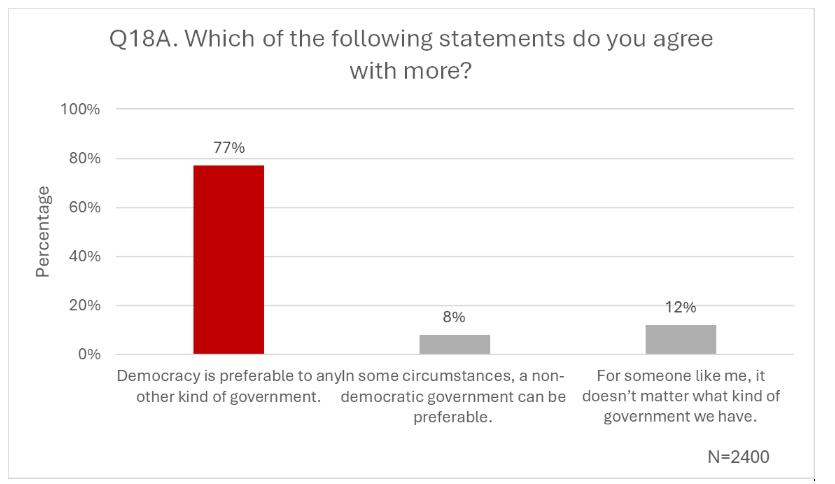
Figure 1. Preference towards Democracy Measure 1a
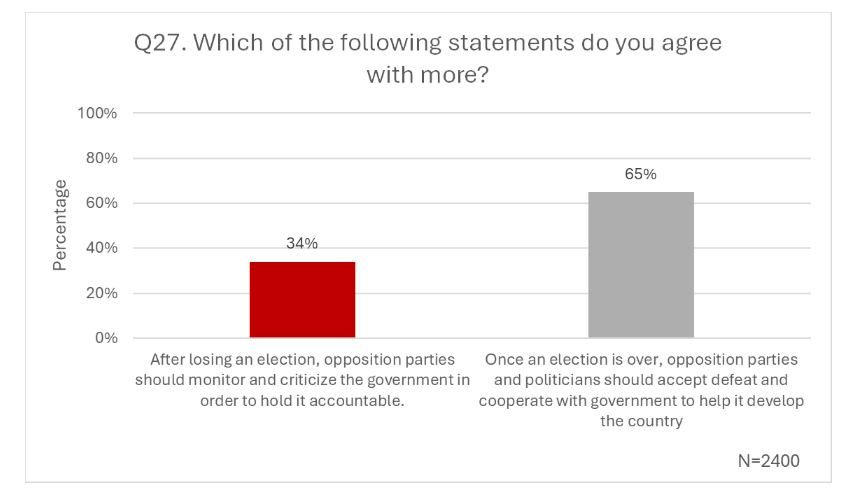
Figure 2. Preference towards Democracy Measure 3c
Conclusion:
The strength of the multivariate index approach lies in its ability to capture complexity. It goes beyond surface-level responses and enables researchers to account for nuance, uncover contradictions, and produce more grounded interpretations of public sentiment. ORB’s commitment to methodological rigor ensures that our population assessments are not only representative but also meaningful—guiding decisions that are informed, credible, and responsive to the realities on the ground.
Download the data here: