
Central Africa is no stranger to Ebola. The challenge now is not simply containing a virus, but understanding how years of repeated crises have shaped public perceptions of risk, trust in institutions, and willingness to respond when new threats emerge.
A “Public Health Emergency”
Health authorities in Central Africa are working to contain a growing Ebola outbreak that has spread across parts of the Democratic Republic of Congo (DRC) and neighbouring Uganda.
The World Health Organization (WHO) declared the outbreak a public health emergency on 15 May after confirmed cases were identified in multiple areas near the DRC-Uganda border. Officials believe the virus may have been circulating undetected for several weeks before the outbreak was formally identified.
The first known case in the current outbreak was a nurse in Ituri province in northeastern DRC who developed symptoms on 24 April. The nurse later died. Health officials say transmission likely increased during funeral preparations and ceremonies, where close physical contact with the body is common.
The Disease and Its Symptoms
Ebola is a rare but serious viral disease that spreads through direct contact with the bodily fluids of infected people or animals. The virus can also spread through contaminated materials, including clothing, bedding, or medical equipment. One of the challenges in controlling Ebola is that symptoms may not appear for between two and 21 days after exposure, allowing transmission to occur before cases are recognized.
Early symptoms of Ebola include fever, fatigue, headaches, muscle pain, joint pain, and sore throat. As the illness progresses, patients may experience vomiting, diarrhoea, rashes, and organ complications. Severe cases can involve internal and external bleeding.
The Strain and Transmission
The current outbreak has been linked to the Bundibugyo strain of Ebola, one of four Ebola virus species known to infect humans. While generally less deadly than the more common Zaire strain, Bundibugyo has still caused serious outbreaks in the past. The Zaire strain was responsible for the 2014–2016 West Africa outbreak, the largest Ebola epidemic recorded, which resulted in more than 11,000 deaths.
Other Ebola species include the Sudan strain, which has caused several outbreaks in Uganda and along the DRC-South Sudan border, and the rare Taï Forest strain, which has only been identified once in a human case in Côte d’Ivoire.
According to figures released by the U.S. Centers for Disease Control and Prevention (CDC) on 27 May, the DRC has reported more than 1,000 suspected cases, including over 120 confirmed infections. Uganda has confirmed seven cases and one death. Authorities temporarily closed sections of the DRC-Uganda border on 27 May as part of efforts to limit cross-border transmission.
Virus Management and Therapies
At present, there is no approved vaccine specifically designed for the Bundibugyo strain. A vaccine developed during the 2014–2016 West Africa outbreak is effective against the Zaire strain but is not believed to provide strong protection against the current outbreak.
Researchers are testing a new experimental vaccine based on the earlier Zaire-targeted version. Early studies in animals have shown encouraging results, although clinical-grade material for human trials is not yet available and could take several months to produce.
In the meantime, treatment efforts are focused on supportive medical care and the use of experimental antiviral therapies that may be effective across multiple Ebola strains. Public health teams are also conducting contact tracing, isolating confirmed cases, and promoting safe burial practices to reduce transmission.
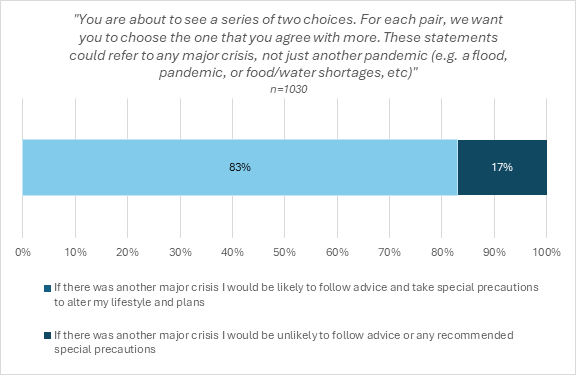
According to ORB public opinion polling conducted on behalf of the Global Listening project in 2023, 83% of Congolese say that they would be likely to follow advice and take special precautions to alter their lifestyle and plans if another major crisis occurred, compared to 17% who said they would not. Taking precautions is important given that officials say containing the outbreak quickly will depend on rapid identification of cases, community cooperation, and access to medical resources in affected regions.