
By Ghazi Ghazi, Senior Researcher
Understanding economic activity within refugee camps is of growing interest within the development field. Stakeholders, oftentimes the agencies and organizations seek to understand the daily needs of its residence to inform the provision of funding and other economic programming within the camps. Assistance programs, whether in-kind or cash assistance for camp residents, often help them to purchase necessary goods for their households, and in turn, participate in the economy of the camp and, in turn, the surrounding region. This data, therefore, helps agencies and implementing partners understand the impact of provision of aid. One of ORB’s most recent refugee camp surveys focused on understanding economic activity within the Mbera camp in Mauritania and the surrounding communities of Bassikounou and Fassala by interviewing 75 local business owners in December-January of 2024. This study was a snapshot of key sectors within the camp, including retail, services, production, crop farmers, and livestock herders.

Economic Activity in Mbera
The Mbera refugee camp, located in the Hodh Chargui region and managed by the United Nations Commission on Human Rights (UNHCR), is currently home to more than 118,000 refugees1. Since its establishment in 2012, the population of the camp has risen more than 900%, mainly as a result of conflict in neighboring Mali which has led to refugees to migrate to the camp due to its close proximity to the shared border between the two countries. Amidst this, a thriving economic sector has emerged within the camp to meet the demand of its residents.
The main market in Mbera was formally established in 2015 to meet the demands of a growing population in the camp2. Today, the market hosts more than 500 shops within the camp and is managed by refugee residents. The refugees manage the market on a daily basis, which includes ordering supplies from Nouakchott and Mali2. Although some businesses operate each day, Tuesday is the main market trading day – where merchants and traders from the local region gather in Mbera to sell and trade. The market boasts a number of shops offering various goods and services, including but not limited to, textiles, clothes, food, crops, and much more. Refugees who receive cash-assistance are able to use that in the market to buy necessary items for them and their families.

Fieldwork
Upon starting fieldwork, we soon learned that the camp had two main business activities: the permanent market which operates every day, and the Tuesday market, which operates once a week. The map below identifies the main market area in the camp where the Tuesday market is held. Enumerators entered the camp and conducted a random walk to identify businesses that fit five key business categories: retail, services, production, crop farmers, and livestock herders. Interviews were conducted with business owners or individuals who knew the most about the business’ finances. We used the same approach in the surveys with business owners in the local community to ensure quota completion and representativeness.
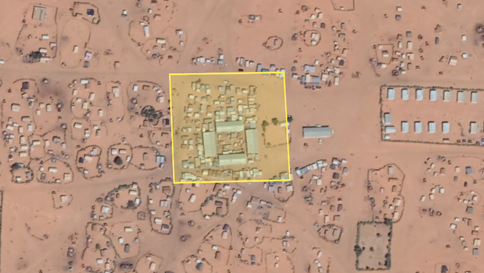
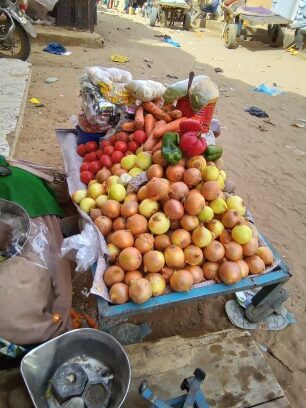
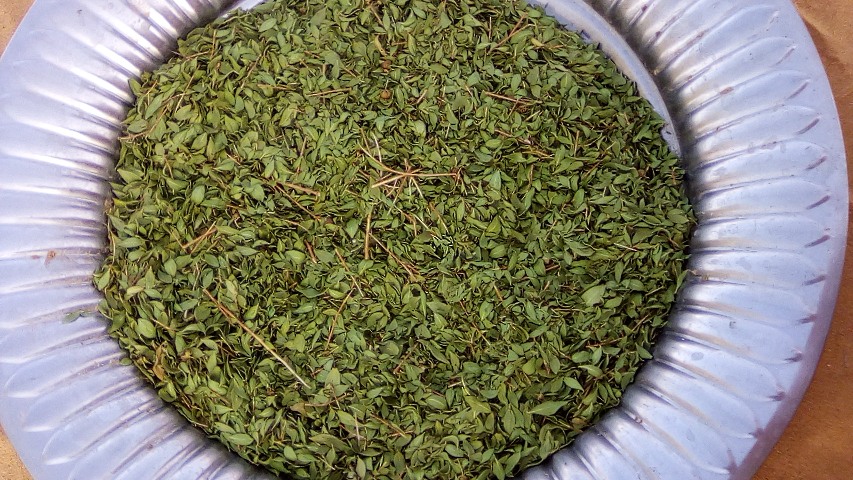
For the permanent market, our enumeration team noted that the production industry in the camp is relatively weak. The range of daily earnings are quite low, with most respondents reporting earning 20 to 100 MRU ($.5-$2.5) daily. Businesses were primarily from small farms, selling goods like vegetables, mint, pistachio, and dry herbs.
For the Tuesday market, many of the sellers in the market are farmers, including some from the local area, as well as tailors and sellers of various materials, services, and goods. Some report daily income ranging from 100 MRU to 2,000 MRU.
Finding livestock herders in the camp was difficult given the challenges of raising and herding animals in an enclosed camp.
Lessons Learned
Having localized knowledge of the camp through hiring refugee enumerators is essential for successful fieldwork: While using experienced enumerators is often a preferred approach, we find that conducting survey fieldwork in refugee camps poses a number of challenges for even experienced enumeration teams. In particular, non-refugee surveyors tend to experience issues with acquiring necessary permissions to enter the camp, face time constraints for conducting surveys in the camp (often have only a few hours in a day to conduct surveys before having to leave the camp and re-enter the next day), and struggle building trust with refugees who might feel uncomfortable with outsiders. Employing enumerators who are refugees themselves allows respondents to feel more comfortable; they often have the language ability to field the survey, and they also carry a wealth of knowledge on localized contexts within the camp that enumeration teams based outside of the area might not be as familiar with.
Low levels of numeracy of sellers as well as small-scale and informal nature of businesses meant that surveys had to be revised during the fieldwork. The respondents in the camp often found it very difficult to recall specific percentages for the questions, such as percentage spent on goods vs labor and estimating profit. Our enumerators had to adapt to the challenge by offering percent ranges for the respondents, typically saying 25% – 50% – 75% – 100% and then working from that range with the respondent to identify the specific percentages relevant to their business.
Understanding surveying conditions in the camp, such as extreme weather, is important in planning for successful and safe fieldwork: The open-air location of the camp exposed enumerators to adverse weather conditions such as intense heat, placing them in danger of heat exhaustion. Enumerators were advised to conduct interviews under covered areas, such as canopies or shelters, and to take frequent breaks to stay safe.
Fitting in interviews around business owners schedule is a must, as sellers are often busy and unavailable to talk during business hours: Undertaking surveys on the same day as the weekly market causes issues with recruitment because business owners often only have that one day of the week to sell their goods. Asking them to step away from selling to answer a few questions was often a difficult ask. It was important for enumerators to be patient and offer flexibility with respondents as they answer questions and face interruptions from customers looking to buy goods.
Seasonality and informal nature of many businesses made finding and classifying local business as belonging to specific sector challenging and sometimes impossible. Part of the scope of this study was to interview businesses in the key sectors of the camp, such as retail, services, production, crop farmers, and livestock. However, formally categorizing the businesses within the camp proved to be difficult as they often did not neatly fit into one category. Additionally, the type of businesses available to interview varies between seasons. For example, there are off-seasons for crops, so interviewing during that time will pose challenges for research teams as there would not be many crop farmers in business during those seasons.
Ultimately, the insights collected from business owners in Mbera proved valuable for implementing partners and the wider development community seeking to understand economic activity within refugee communities, and in particular, camps. This type of data will allow stakeholders to understand the needs of refugee populations through their purchases, what goods and services are available within the camp and local community, and how to better allocate resources and cash assistance for basic necessities.
______________________________________
1 Malian Refugees | Operational Data Portal
2 Activities in MberaCamp | Reliefweb